Reviewing Close Up of Gekkonidae Lineart for Merch
As an embroidery designer who has spent years digitizing artwork for small businesses, I approach every new machine embroidery design with a critical eye. It is not enough for a file to look pretty on a screen; it must perform under the needle, survive industrial washing, and elevate the brand it represents. Today, I am reviewing Close Up of Gekkonidae Lineart, a digital asset from the Reptiles category that promises clean lines and versatile application. For boutique owners, Etsy sellers, and apparel decorators, understanding how this specific line art translates into physical thread is crucial for maintaining professional standards.
First Impressions: Minimalist Precision
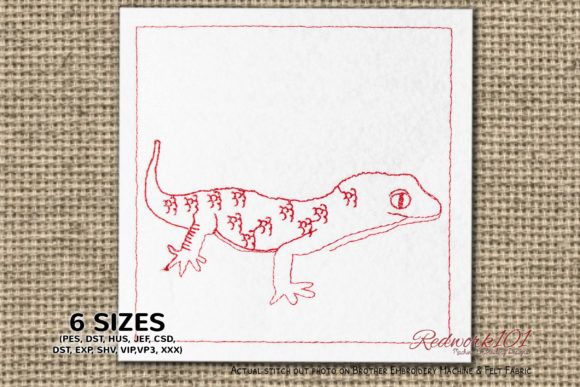
The immediate visual impact of Close Up of Gekkonidae Lineart is one of refined simplicity. Unlike complex, shaded illustrations that can turn into muddy blobs when stitched out, this design relies on strong, deliberate outlines. The "lineart" style suggests a modern, graphic aesthetic that feels both premium and approachable. For a handmade brand or a creative studio, this visual personality strikes a balance between artistic flair and commercial clarity. It does not scream for attention with excessive color; instead, it invites closer inspection, which is exactly what you want for a logo accent or a subtle branding element.
The description notes that the Box Stitch shown in promotional pictures is optional. This is a significant detail for production flexibility. It implies that the core value lies in the gecko illustration itself, allowing us to adapt the outer boundary based on the garment or patch shape. Furthermore, the note that the outer box color is often different—and can be skipped—suggests the designer prioritizes the integrity of the central image over rigid framing. This adaptability is vital for custom apparel where fabric colors vary wildly.
Real-World Business Applications
When evaluating a digital embroidery file for commercial use, I always ask: where does this live in the real world? For Close Up of Gekkonidae Lineart, the applications are diverse but specific. Here is how I see this design performing across various small business merch categories:
- Embroidered Patches: This is arguably the strongest use case. The clean lines allow for crisp edges on twill or felt backings. Whether used as a morale patch for outdoor brands or a decorative element for pet accessory shops, the line art holds up well against the texture of patch materials.
- Cap Embroidery: Caps present a curved, challenging surface. Because this design avoids heavy fill stitches, it reduces puckering on the front panel of a baseball cap. It works excellently as a side-panel detail or a small center chest-style logo on structured hats.
- Tote Bag Design: Canvas bags have a coarse weave. A line-art design penetrates this fabric texture more effectively than dense satin stitches, which can get lost in the weave. It adds a touch of sophistication to eco-friendly packaging or bookstore merchandise.
- Apron Embroidery: For cafes, florists, or bakeries, staff uniforms need to look professional yet durable. Placing this gecko motif on the chest pocket or strap of an apron creates a subtle brand identifier without overwhelming the customer’s view.
- Product Packaging Accents: Small businesses often use embroidered tags or sewn-in labels. The scalability of line art makes it suitable for tiny branding elements on hangtags or woven labels, enhancing the perceived value of the finished product.
Navigating Production Challenges
While the design is promising, no embroidery file is immune to production pitfalls. As a designer, I must highlight areas where caution is required. The primary concern with any line art is stitch density and spacing. If the lines are too thin, they may break during high-speed stitching or fray after multiple washes. Conversely, if the digitizer has compensated by making them too thick, the intricate details of the Gekkonidae scales might merge, losing the "close up" definition that gives the design its character.
Another critical factor is the substrate. On dark uniforms, such as navy or black work shirts, contrast becomes key. If the thread colors do not pop against the fabric, the line art will vanish. I recommend testing high-contrast thread combinations, such as white or metallic gold on dark fabrics, to ensure visibility. Additionally, when applying this to textured fabrics like terry cloth or heavy denim, the fine lines might get obscured. In these cases, using a sturdy cut-away stabilizer is non-negotiable to prevent distortion.
Size matters immensely. If you intend to use this as a tiny chest logo, verify the minimum viable size. Line art can become illegible if scaled down beyond the needle's precision limits. Always check the recommended hoop size and minimum dimensions provided by the seller before committing to a large production run.
Impact on Brand Identity and Trust
Consistency is the cornerstone of brand identity. Using a cohesive visual language across all touchpoints—from social media graphics to physical small business merch—builds trust. Close Up of Gekkonidae Lineart offers a distinct aesthetic that can help a brand stand out in crowded markets like pet care, outdoor gear, or niche hobby supplies. When customers receive a tote bag or shirt with a cleanly executed, professional-grade embroidery, it signals quality. It tells them that the business cares about details.
For Etsy sellers and crafters, offering items with unique, well-digitized designs increases buyer engagement. A generic clipart feel can devalue a handmade product, but a precise, artistic line drawing elevates it. This design, when stitched correctly, contributes to a perception of elegance and modernity. It moves the item from being merely functional to being a desirable lifestyle accessory.
Practical Designer Notes for Implementation
Before you load this file into your machine for a client order, follow these practical steps to ensure success:
- Test in Black and White First: Strip away the color variables. Stitch the design in single-color thread on white fabric. This reveals the true structure of the digitizing, highlighting any gaps, overlaps, or density issues without the distraction of hue.
- Check Scalability: Resize the design to your intended final dimensions. Does the gecko’s eye remain distinct? Do the toes separate clearly? If details merge, the design may be too complex for small-scale application.
- Review Thread Color Contrast: Plan your palette. Since the outer box color is optional and often different, decide if you need a border to frame the gecko or if the line art stands alone. Ensure your chosen threads complement the fabric base.
- Inspect Spacing and Density: Look at the stitch file preview. Are there long jumps that need tie-offs? Is the underlay sufficient for the fabric type you are using?
- Create a Printable Mockup: Before stitching, place the design digitally on a photo of the actual garment. This helps visualize placement and proportion, saving time and material.
- Confirm Commercial Licensing: Always verify the license terms associated with the digital embroidery file. Ensure you have the rights to use it for physical goods sold for profit. If the description does not explicitly state commercial rights, contact the creator before proceeding.
In conclusion, Close Up of Gekkonidae Lineart is a versatile asset for the right project. It thrives in applications that value clean, graphic aesthetics over heavy saturation. By respecting its limitations regarding size and fabric texture, and by leveraging its strengths in patch and apparel branding, small business owners can create high-quality, memorable merchandise. Always prioritize a test stitch on your specific fabric combination to guarantee that the final result matches the professional standard your brand promises.