Cats Embroidery Design Review for Small Business Merch
As an embroidery designer who has spent years digitizing and reviewing files for commercial use, I approach every new machine embroidery design with a critical eye. It is not just about whether a motif looks cute on a screen; it is about how it performs under the needle, how it holds up after washing, and most importantly, how it elevates a brand. Today, I am reviewing Cats, a digital asset that promises to be the perfect addition for cat lovers and small business owners alike. This review focuses on its viability for branded patches, custom apparel, and handmade product lines.
First Impressions and Visual Personality
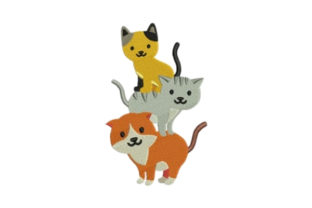
The initial description of Cats highlights its adorable nature and versatility across fabrics. From a design perspective, "adorable" often translates to rounded shapes, soft curves, and approachable aesthetics. For small business owners, particularly those in the pet industry, boutique retail, or creative studios, this visual personality is a powerful tool. It feels friendly, playful, and handmade rather than corporate or sterile. This distinction is crucial when building brand identity. A design that feels too rigid can alienate customers looking for warmth and connection, whereas a playful motif like Cats invites engagement and trust.
However, cuteness must be balanced with professionalism. In my experience, designs that are overly complex in their attempt to be "cute" often fail in production. The key question here is whether the lines are clean enough to look premium on a finished product. If the design maintains clarity without excessive clutter, it serves as an excellent asset for small business merch that needs to stand out in a crowded market.
Real-World Applications for Branded Merchandise
Let us move beyond theory and look at practical applications. Imagine you run a local café, a florist shop, or an Etsy store specializing in handmade goods. How does Cats fit into your inventory?
- Embroidered Patches: This is perhaps the strongest use case. An embroidered patch allows for high-density stitching and durability. If Cats has bold outlines, it will pop on denim jackets, canvas bags, or even laptop sleeves. Patches are low-risk, high-reward items for testing new designs.
- Staff Uniforms and Aprons: For a pet groomer or a quirky bakery, adding Cats as a chest logo accent on aprons creates instant brand recognition. It turns staff into walking advertisements. However, placement matters. A chest pocket area is ideal for visibility without interfering with movement.
- Cap Embroidery: Caps are tricky due to the curved surface. If the design is compact, it works beautifully on the front panel. If it is too wide, it may distort. Always check the width dimensions before hooping.
- Tote Bag Design: Canvas totes are a staple for craft fairs. A well-digitized version of Cats can serve as a central focal point. Ensure the stitch density is appropriate for canvas, which is thicker than standard cotton.
These applications transform a simple digital embroidery file into tangible design assets that drive sales. Whether used for customer gifts, event merch, or premium add-ons, the versatility of the design determines its ROI.
Technical Considerations and Production Challenges
While the aesthetic appeal is clear, the technical execution is where many businesses stumble. The product description notes that it comes with multiple embroidery file formats, which is essential for compatibility with various machines. However, it does not specify stitch count, exact hoop size, or recommended stabilizer types. As a professional, I advise you to verify these details before committing to a large production run.
Stitch density is a critical factor. If the design is too dense, it can cause puckering on lightweight fabrics like t-shirts or poly-blends. Conversely, if it is too sparse, the fabric may show through, reducing the perceived quality. Always test the design on the actual fabric you intend to use. Fabric texture plays a significant role; a textured towel will hide minor imperfections, while a smooth satin shirt will reveal every jump stitch.
Another consideration is color contrast. The description mentions it looks cute on any fabric, but this depends heavily on thread selection. On dark uniforms, you will need bright, high-contrast thread colors to ensure the design is visible. On light fabrics, subtle tones may work better. I recommend creating a printable mockup first to visualize how different thread palettes interact with your base material.
Impact on Brand Identity and Customer Trust
Consistency is key in branding. Using Cats across multiple touchpoints—from your website headers to your physical custom apparel—creates a cohesive visual language. When customers see the same high-quality embroidery on their tote bag as they do on your social media posts, it reinforces professionalism. It signals that you care about the details, which builds trust.
For handmade brands, the presence of machine embroidery adds a layer of perceived value. It suggests craftsmanship and effort, distinguishing your products from mass-produced imports. This is particularly important for Etsy sellers and crafters who compete on uniqueness and quality. A well-executed finished product featuring Cats can justify a higher price point because it offers durability and aesthetic appeal that printed graphics cannot match.
Practical Designer Notes for Implementation
Before you launch your next collection featuring this design, follow these steps to ensure success:
- Test in Black and White: Remove color from your simulation to check if the shape holds up. If the design relies solely on color to define its features, it may lack structural integrity.
- Check Small Patch Size: Scale the design down to the smallest size you plan to offer. Ensure details do not merge or become indistinguishable.
- Review Thread Color Contrast: Select threads that complement your brand palette while ensuring legibility.
- Inspect Spacing and Hoop Size: Confirm that the design fits comfortably within your available hoop sizes without requiring excessive re-hooping.
- Use Proper Stabilizer: Match the stabilizer to the fabric weight. Cut-away stabilizers are generally better for garments that will be washed frequently, while tear-away works for stable fabrics like caps.
- Confirm Commercial Licensing: The description implies it is for sale, but always read the specific license terms. Ensure you have the right to use the commercial embroidery file for physical goods you intend to sell.
In conclusion, Cats presents a promising opportunity for small business owners looking to add charm and personality to their merchandise. Its potential lies in its adaptability, but its success depends on rigorous testing and thoughtful application. By treating this embroidery file as a strategic brand asset rather than just a decorative element, you can create products that resonate with customers and stand the test of time.