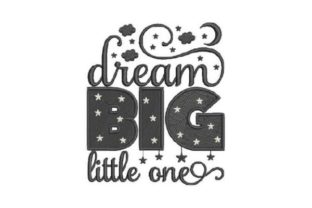
Dream Big Little One: A Designer’s Review
As an embroidery designer who has spent years digitizing logos and testing files for commercial use, I approach every new machine embroidery design with a critical eye. It is not enough for a design to simply look cute on a screen; it must perform under the needle, withstand washing, and elevate the brand it represents. Today, I am reviewing Dream Big Little One, a digital asset that markets itself primarily for the kid’s bedroom but holds significant potential for small business merchandise and branded patch use.
The initial impression of Dream Big Little One is undeniably friendly and playful. The typography and motif suggest warmth, making it an excellent candidate for brands that want to project approachability and care. While the product description highlights its suitability for Bed linens and nursery decor, my focus here is on its viability as a versatile element in a broader commercial Embroidery strategy. For boutique owners, Etsy sellers, and local businesses, understanding how this design translates from a home decor item to a professional branding tool is essential.
Visual Personality and Brand Alignment
When evaluating Dream Big Little One, the aesthetic leans heavily toward the handmade and premium feel that modern consumers crave. It does not scream corporate rigidity; instead, it offers a soft, decorative touch. This makes it ideal for businesses in the family-oriented sector, such as bakeries, florists, pet brands, or creative studios targeting parents. The design feels organic rather than industrial, which can significantly boost customer trust by humanizing the brand.
However, visual consistency is key. If your brand identity is sleek, minimalist, or high-tech, this design might clash. But for a handmade product line or a boutique that values whimsy, Dream Big Little One serves as a strong visual anchor. It communicates a message of encouragement and growth, which resonates deeply with customers looking for meaningful connections with the brands they support.
Real-World Applications for Small Business Merch
Beyond the nursery, where can this design truly shine? Let us explore its performance across various small business merch categories.
- Embroidered Patches: This is perhaps the strongest application. A well-digitized version of Dream Big Little One can be turned into a high-quality embroidered patch. These patches can be sold as standalone items or used to upgrade plain tote bags and denim jackets, adding immediate value to a basic product.
- Staff Uniforms and Aprons: For cafes and boutiques, apron embroidery adds a layer of professionalism. Placing this design on the chest pocket or lower hem of an apron creates a subtle yet memorable brand mark. It signals to customers that the staff cares about details.
- Cap Embroidery: Using this design on the front or side of a cap requires careful scaling. If the lettering remains legible at a smaller size, it becomes a trendy accessory for customers. However, curved surfaces demand precise digitizing to prevent puckering.
- Tote Bag Design: Canvas totes are a staple for eco-friendly brands. Dream Big Little One works well as a central focal point on a tote bag design, appealing to parents and gift-buyers alike.
Technical Considerations and Production Risks
While the aesthetic appeal is high, technical execution determines the success of the finished product. As a designer, I must warn against assuming this file is ready for all applications without testing. The description notes that it comes with multiple embroidery file formats, which is standard, but it does not specify stitch count or density. This is a critical gap for commercial production.
Stitch density is a major factor. If the design is too dense, it will cause fabric distortion, especially on lighter materials like cotton t-shirts or thin apron fabrics. Conversely, if it is too sparse, the backing fabric may show through, ruining the professional look. Before running a full batch of custom apparel, you must test the design on the actual fabric you intend to use.
Another risk involves small details. If Dream Big Little One includes fine lines or tiny text, these may not hold up in an embroidered patch meant for frequent washing or rough handling. I recommend checking the spacing between elements. Tight spacing can lead to thread breaks or bird-nesting during high-speed machine embroidery. Always inspect the design at 100% zoom in your software before loading it onto the machine.
Enhancing Brand Identity and Customer Engagement
Using Dream Big Little One strategically can enhance your brand identity. When customers see consistent, high-quality embroidery on your packaging accents, gift tags, or loyalty rewards, it reinforces perceived value. It transforms a simple transaction into an experience. For Etsy sellers, offering items with this design can differentiate your shop from competitors who rely solely on printed graphics. Embroidery implies durability and craftsmanship, two traits that justify higher price points.
Moreover, this design can be part of a larger suite of design assets. By pairing it with complementary colors and fonts, you create a cohesive visual language. This consistency builds recognition. Whether it is on a work shirt, a promotional tote, or a limited-edition product label, the design acts as a silent ambassador for your business values.
Practical Designer Notes for Implementation
To ensure success with Dream Big Little One, follow these practical steps before committing to large-scale production:
- Test in Black and White: Remove color variables first. Check if the design holds its shape and clarity without the distraction of thread colors. This helps identify structural issues in the digitizing.
- Verify Hoop Size Compatibility: The description does not specify the optimal hoop size. Measure the design dimensions and ensure it fits within your standard hoops without requiring excessive re-hooping, which can misalign patterns.
- Select the Right Stabilizer: Fabric texture matters. For stretchy knits, use a cut-away stabilizer. For woven cottons or towels, a tear-away might suffice. Incorrect stabilizer choice leads to puckering and poor registration.
- Create a Printable Mockup: Before stitching, generate a printable mockup to show clients or stakeholders. This saves time and thread by allowing for visual approval of placement and scale.
- Confirm Commercial Licensing: The description mentions it can be used with multiple formats, but always verify the license terms. Ensure you have the right to use Dream Big Little One for commercial embroidery and resale. Never assume a personal-use license covers business merchandise.
In conclusion, Dream Big Little One is more than just a nursery decoration. With careful technical evaluation and strategic placement, it becomes a powerful tool for small businesses looking to add a touch of warmth and professionalism to their merchandise. By respecting the limitations of the medium and leveraging the emotional appeal of the design, you can create products that customers cherish and keep for years.